Hippotherapy
Why Horses?
The magic of hippotherapy — how the movement of a horse helps children build physical, emotional and cognitive skills.
The magic of hippotherapy — how the movement of a horse helps children build physical, emotional and cognitive skills.
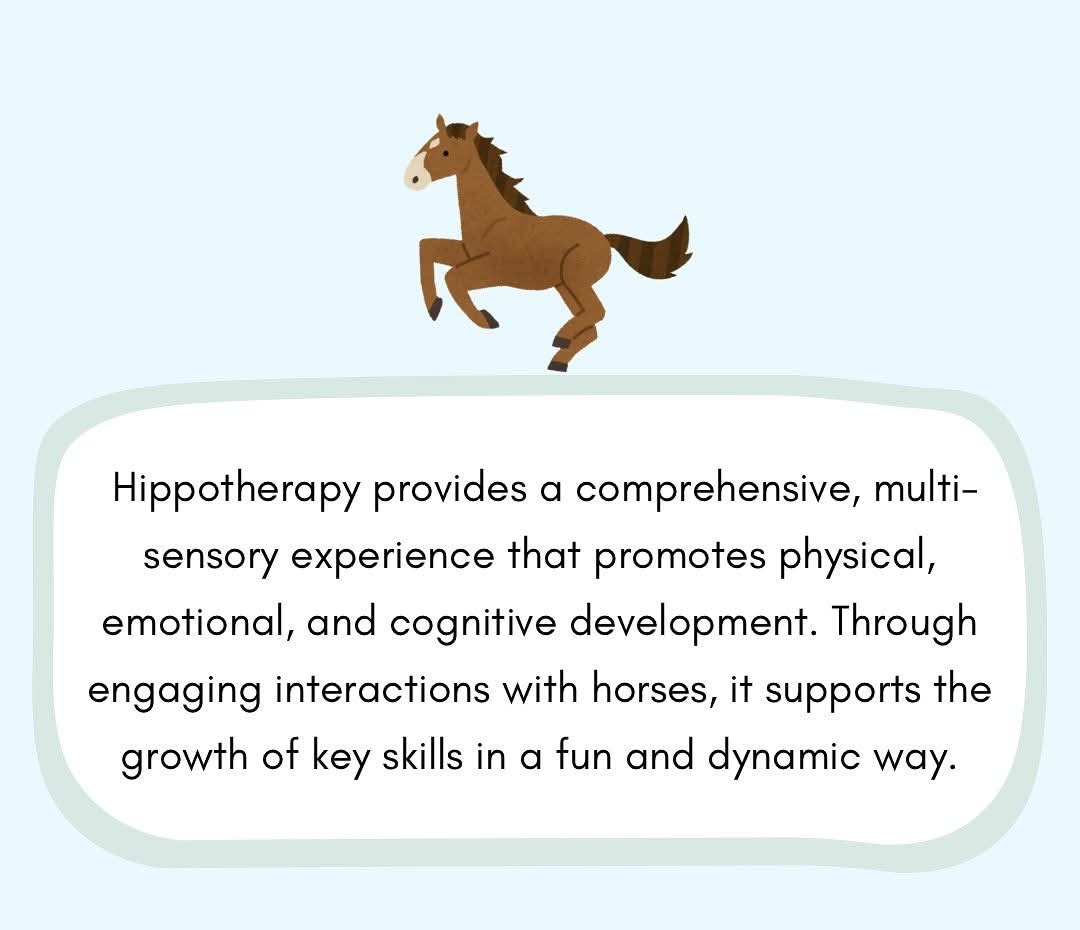
Hippotherapy provides a comprehensive, multi-sensory experience that promotes physical, emotional and cognitive development. Through engaging interactions with horses, it supports the growth of key skills in a fun and dynamic way.
Because the horse's gait closely mimics the human walking pattern, every session becomes a gentle, motivating form of therapy — one that children look forward to. Below are the seven key areas where horses help children thrive.
The rhythmic movement of the horse simulates human walking patterns, which helps improve coordination, muscle strength and trunk control. It also promotes motor planning as children learn to adjust their movements to the horse's motion.
Riding a horse requires constant adjustment and engagement of core muscles to stay balanced. This dynamic activity enhances control and stability, helping children develop better balance and postural control.
The bond formed with the horse and the calming effect of riding can reduce anxiety and stress. The therapeutic environment also encourages emotional expression and builds self-esteem as children achieve new skills and connect with the horse.
The rhythmic and repetitive movement of the horse provides sensory input that helps children better process and respond to sensory information. It stimulates the vestibular, proprioceptive and tactile systems, allowing children to become more aware of their body in space — which can improve their ability to handle everyday sensory experiences.
The therapeutic setting of hippotherapy encourages children to communicate with the horse, therapist and others involved. Whether it's giving commands to the horse or expressing their feelings during the session, this interaction helps improve speech, language skills and overall communication abilities in a natural and motivating environment.
Riding a horse requires coordinated movement, as children must adjust their posture and synchronise their movements with the horse's gait. This helps improve motor planning, bilateral coordination and timing, which are essential for performing daily activities such as walking, writing and playing sports.
The act of maintaining balance and posture on a moving horse engages core muscles and builds strength throughout the body. This dynamic exercise targets specific muscle groups, improves stability and increases overall muscle strength, contributing to better physical function and endurance.
Our program is developed and written by an Occupational Therapist. We bring a horse-assisted ECD program to your school — bringing the ponies to you every week during school hours.
Early Childhood Development (ECD) encompasses a child's holistic growth from birth to around age 8, covering physical, cognitive, social and emotional development, and is crucial for laying the foundation for lifelong learning and success.
Refines and develops gross and fine motor movements.
The movement of the horse improves balance and enhances posture.
The rhythmic movement of the horse can help strengthen and improve muscles.
It provides a variety of sensory inputs.
It improves their ability to perform daily tasks.
Speak to our team about how horse-assisted therapy could support your child's development.